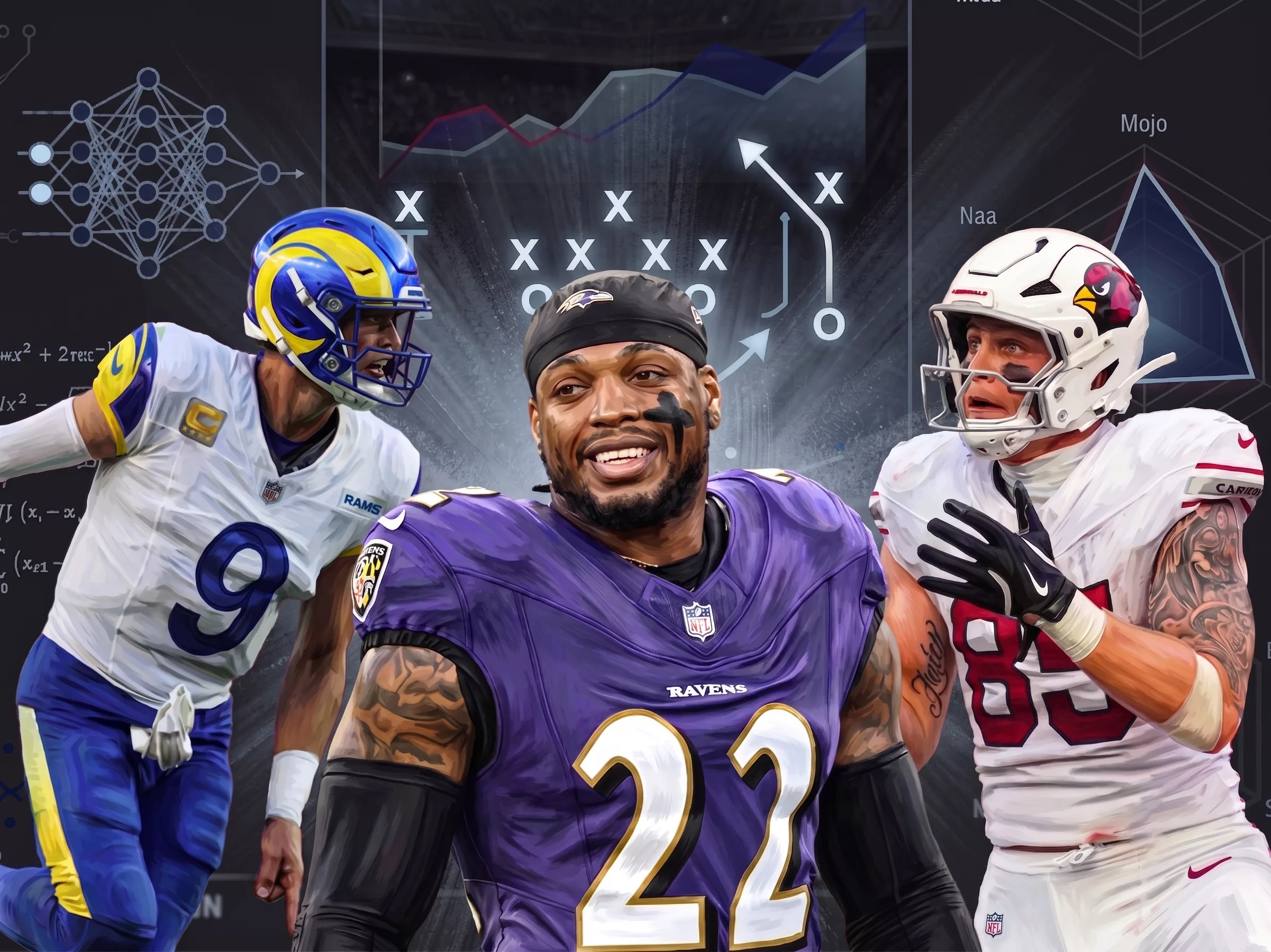
Welcome to another edition of AI versus Vibes, where we look at the data while the rest of the industry plays fantasy football in a sandbox. Today we are talking about the massive, yawning chasms between our rankings and the lazy media consensus you find on ESPN, Yahoo, and CBS. They are ranking names and chasing last week's box scores. We are calculating role quality, efficiency, and role stability. Let's start with Trey McBride.
Trey McBride: WOPR Monster
The consensus has McBride sitting all the way down at twenty-seven overall. We have him at number five. Yes, fifth overall. Look, the industry treats tight ends like some mandatory chore, a position where you just pray for a random touchdown. We treat them like target-earning assets. McBride does not have a tight end profile. He has an alpha wide receiver profile wearing a bigger helmet. We are talking about an elite zero point five nine zero WOPR and a monster twenty-seven point nine percent target share. On top of that, he is highly efficient, generating zero point three nine nine expected points added per opportunity, with a microscopic fragility rating of just six point one two. If you rank twenty-six players ahead of that kind of bankable, high-volume security, you are simply paying a vibes tax on a position label.
QuaterbackS: Controversy
Now let's talk about the quarterbacks, where the industry has completely lost its mind. Matthew Stafford is QB thirteen in consensus. We have him at QB four. Jordan Love is QB twenty in consensus. We have him at QB five. Let's address the Stafford disrespect first. The market is absolutely obsessed with rushing upside, to the point where they will rank mediocre passers with fast legs over elite pocket distributors. Stafford has zero rushing floor. We know this. But what he does have is a hyper-efficient McVay offense and passing metrics that make the rest of the league look like amateurs. Stafford put up a massive one hundred eighteen point six two season passing EPA, pushing him to over twenty fantasy points per game. He has Devante Adams and Puka Nacua. Why are we treating him like a streaming option?
And Jordan Love at QB twenty is just generationally unserious. Love generated a massive one hundred twenty-two point nine five season EPA and an incredibly efficient zero point two four eight EPA per opportunity. He is a surgical pocket passer in a Matt LaFleur system that creates open space for fun. To rank nineteen quarterbacks ahead of that level of stable efficiency is not a serious process. The math says efficiency wins in standard, and Love's baseline is bulletproof.
Derrick Henry: A King's Ransom
On the flip side, let's look at Derrick Henry. Consensus has him as a top-seven running back. We have him down at RB twenty. This is touchdown chasing with a fake mustache. The public sees the name and the high carry share in Baltimore and drafts him blind. We look at a running back with a high fragility rating of ten point eight eight and literally zero receiving ceiling. His target share and WOPR are a microscopic zero point zero seven five. In standard leagues, if Henry does not find the end zone, his floor completely evaporates. Yes, he generated nine point one seven rushing EPA on a fifty-nine point eight percent carry share, but he is entirely dependent on Baltimore's offense staying hyper-efficient in the red zone. If that scoring pace slows down, or if his body finally remembers his age, your first-round pick is completely cooked. RB twenty is where the risk is actually priced correctly.
Garrett Wilson: Volume Victor
Finally, let's look at Garrett Wilson. Consensus has him down at WR twenty-two. We have him locked into the top ten as our WR ten. The market is letting the bad quarterback vibes drag down an elite volume engine. Yes, his efficiency metrics are ugly. We are not hiding from his negative zero point two three five EPA per opportunity. That is a red flag. But a thirty-five point four percent target share and an elite zero point nine two five WOPR are impossible to ignore. In fantasy football, opportunity is the ultimate truth. Wilson earns targets at a rate that almost nobody else in the league can match. If his quarterback play moves even slightly toward league average, he is a top-five lock. Ranking him at twenty-two is lazy analysis that ignores the unbreakable volume floor.
That is the difference between drafting on historical name value and drafting on actionable metrics. You can follow the consensus and collect your league's participation trophy, or you can trust the data. I know which one I am choosing.

Comments 0
No comments yet.