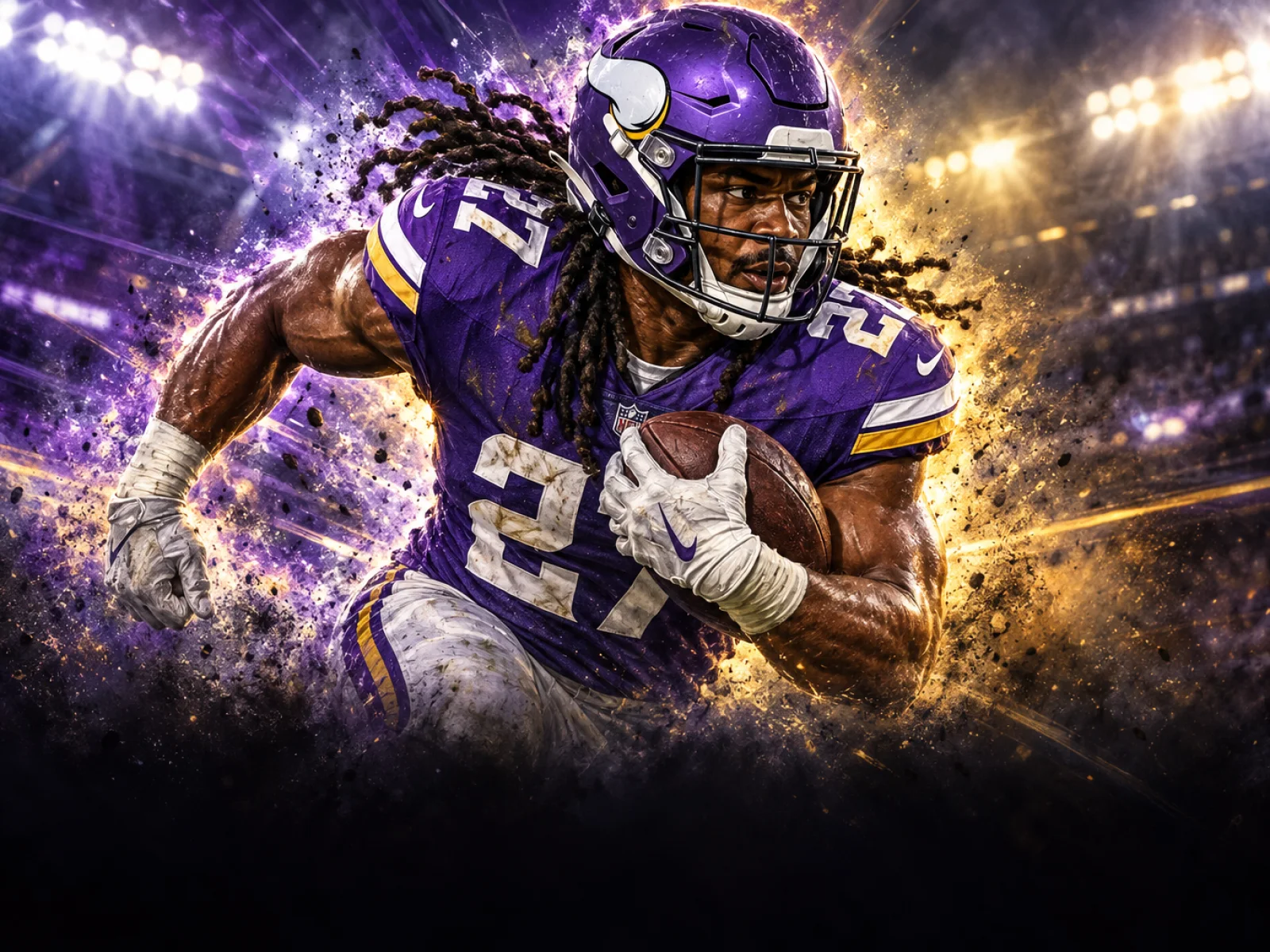
Draft Sharks reported that the Minnesota Vikings designated Jordan Mason to return to practice following his thumb injury, and the fantasy landscape immediately lost its collective mind. I see managers acting like an elite RB1 just fell out of the sky into their starting lineups. Respectfully no. I am not buying into the sudden surge of optimism. If you are expecting an immediate seismic shift in the rankings, you are completely delulu.
The Practice Window Mirage
Let us look at what actually took place. Opening a practice window is routine roster maintenance, not an automatic guarantee of immediate weekly dominance. The Vikings have three weeks to activate Mason to the 53-man roster. More crucially, Mason is not playing Sunday against Indianapolis. A practice designation does not force an algorithmic climb on my board, and I refuse to let injury transaction chatter dictate rank order.
On my Standard board, Mason sits at #106 overall and RB37 with a 7.9 PPG projection. That valuation is grounded in reality, not wishful thinking. In his lone appearance through Week 1, he logged 15 carries for 59 yards and a touchdown, delivering 11.9 Standard fantasy points. But projecting forward, my metrics award him just 10.6 non-garbage-time touches per game and a negligible 3.5 percent target share. His efficiency score sits at -0.03 EPA per touch, resulting in a negative adjusted VORP of -0.28. He is the definition of a low-ceiling flex option, yet every knee-jerk meatbag in your league wants to treat him like a league winner.
The Minnesota Backfield Dynamic
The rush to elevate Mason completely ignores how backfield volume splits in Minnesota. Aaron Jones occupies the Standard board at #87 overall and RB32 with an 8.4 PPG projection. While Draft Sharks noted that Mason out-carried Jones 15 to 12 in the opener before fracturing his thumb, this offense operates as a timeshare. When you divide early-down work and eliminate pass-catching involvement, nobody walks away with an RB1 profile.
In standard scoring formats, volume alone does not save an inefficient runner. Mason commands almost zero passing-game utility, and his 1.9 red-zone touches per game limit any sustained touchdown variance. Throwing him into your lineup expecting 15 guaranteed points is classic box-score merchant thinking. You are chasing a single touchdown scored six weeks ago and assuming an identical workload will just materialize the moment he steps back onto the field.
Why My Board Remains Unmoved
I build my rankings on baseline volume, scoring equity, and efficiency metrics, not the emotional cycle of practice reports. The gap between Mason at RB37 (7.9 PPG) and fringe RB2s like Zach Charbonnet at RB21 (10.0 PPG) or Kenneth Walker III at RB22 (9.8 PPG) is substantial. Mason lacks the bankable goal-line monopoly required to leapfrog productive rotation backs.
So what would actually change my mind? I would need to see Mason fully activated, demonstrate sustained health, and officially secure a clear two-thirds rushing share over Jones without sacrificing goal-line snaps. Until Minnesota hands him 18 touches per game inside a fully consolidated committee, I will leave him exactly where he belongs: an uninspiring flex play parked at RB37.

Comments 0
No comments yet.